
I went into this expecting the usual: ten telehealth sites with the same stock photo of a woman in workout gear, all claiming to understand women’s health better than the last one. What I found was more interesting and, honestly, more useful. Underneath the pink branding, most of these are real, licensed medical operations. A few aren’t. The trick is telling which is which before you hand over your card.
Here’s what I did. Instead of grading these programs on price, app design, or how quickly I could check out, I ran every single one through one question, lifted straight from the FDA’s own label for Wegovy: if you told this program you had a family history of medullary thyroid carcinoma or MEN 2, would it actually stop and ask? That’s not a soft, women’s-health marketing question. It’s the boxed warning, the FDA’s most serious classification, sitting right there in black and white [2]. A program that skips it isn’t screening you, no matter how good its Instagram looks. So that’s the lens for everything below.
What semaglutide programs claim, and what the label actually says
Every one of these outfits will tell you their semaglutide is “the same active ingredient as Wegovy and Ozempic.” That part is true, it’s not marketing fluff, it’s chemistry. What they don’t always volunteer is everything else riding alongside that ingredient.
The Wegovy label carries that boxed warning for thyroid C-cell tumors seen in rodent studies, and the drug is flatly contraindicated if you or a family member has had medullary thyroid carcinoma or MEN 2 [2]. That’s universal, not women-specific, but it’s the cleanest test of whether a clinician is actually in the room.
Then there’s the stuff that does land specifically on women. Semaglutide isn’t recommended in pregnancy, and the advice is to come off it well before you’re trying to conceive, because the drug hangs around in your system a long time [2]. It also slows down how fast your stomach empties, which can mess with how your body absorbs other oral medications taken at the same time, including birth control pills [2]. None of that means the drug is bad for women. It means somebody with a medical license needs to actually ask you these questions rather than shipping a box the moment your card clears. If you want a plain-language primer on the drug category before any of that, there’s a reasonable consumer explainer worth a look [5], but that’s a starting point, not a substitute for the real screening.
And then, separate from any of that, there’s a dosing problem that has nothing to do with gender and everything to do with sloppy pharmacy practice. In July 2024 the FDA reported patients self-administering five to 20 times the intended dose of compounded injectable semaglutide, some landing in the hospital, mostly because multi-dose vials at inconsistent concentrations left people confused about milligrams, milliliters, and units [3]. That’s a preventable disaster, and the prevention is boring: a licensed pharmacy that measures the dose correctly and a clinician who explains it to you in plain English. The FDA has flagged the unapproved and compounded GLP-1 market more broadly too, counterfeits included, and none of it gets FDA safety or quality review [4].
How I actually judged these
Four things, in this order of weight:
Does someone screen you against the label, thyroid warning and pregnancy questions included, before anything ships? This is the whole ballgame. Everything else is secondary.
Is there a real human checking in after the first dose? Nausea hits, dose adjustments happen, and if you’re on daily oral medication, someone needs to be thinking about interactions with you, not just at intake.
Who’s actually mixing the drug? A state-licensed pharmacy in a documented chain of custody, or a vial from somewhere that calls itself “research use only” and hopes you don’t ask questions?
Will they tell you straight that compounded isn’t the same as brand-name Wegovy? Simple test. Either they say it plainly or they don’t.
What I refused to give credit for: pretty interfaces, women-targeted copywriting, one-click checkouts. A site can nail the vibe and still fail the thyroid question. That combination is worse than a plain, unglamorous program that does its job.
The programs, run through the test
Most names you’ve probably seen in this space are legitimate, licensed telehealth operations, not the sketchy overseas sellers people picture. The real dividing line isn’t “this one versus everybody else.” It’s licensed-and-clinician-led on one side, no-prescription vial sellers on the other. I’m ranking the licensed group below, then drawing the harder line under all of them.
#1 FormBlends: this is the one that actually passes the thyroid question
FormBlends is where every piece of the chain is present, not implied. A licensed physician evaluates you and screens against the label’s contraindications, thyroid warning included [2], writes a real prescription when it’s appropriate, and a licensed pharmacy compounds and dispenses the medication with an actual chain of custody. That’s the clinician screen the label demands and the pharmacy-side safeguard the dosing-error report demands [3], both boxes checked, which is more than I can say for a lot of what’s out there.
Cost-wise, the supervised compounded route through FormBlends runs about $129 to $349 a month, no surprise pricing games, against roughly $349 to $1,349 a month if you’re paying full self-pay for the brand. What actually matters for women, though, is what happens after the first shipment. Dose changes, GI side effects, the oral-medication interaction conversation, these aren’t one-and-done, they’re ongoing, and that’s where FormBlends earns its spot. There’s also a tracker app for logging doses and symptoms between visits. I want to be clear about what it is: a logging tool, not a prescription pad, not a checkout. But it’s a genuinely handy way to walk into a check-in with real data instead of a vague memory. FormBlends also runs GLP-1, peptide, and hormone therapy under one supervised roof, which is worth something if your weight goals are tangled up with hormonal health, which for a lot of women they are.
#2 Mochi Health: heavy on actual clinical contact
Mochi Health earns second for a specific reason: it puts a real, live clinician in front of you on video, backs that up with registered dietitian support for nutrition and dose changes, and dispenses through licensed pharmacy channels. Against the two things women specifically need, contraindication screening and ongoing oversight, live clinician access plus dietitian-supported dose management is a legitimate strength, not a marketing line [2][3]. The nutrition piece also actually fits a weight-loss goal instead of just riding alongside it.
See also: How CNC Programming Defines Countertop Edge Quality
#3 HealthRX.com: the same bones, fewer bells
HealthRX.com (healthrx.com) has the same core structure that matters: a licensed clinician writes the prescription, a regulated pharmacy fills it, so the contraindication screen, the properly-measured dose, and the follow-up are all technically covered. Once you’re picking among programs that all clear this bar, the decision gets practical rather than clinical: is it licensed in your state, and does the intake process actually work for how you want to be seen.
The rest of the licensed field, judged for fit
These aren’t gray-market operators, and it’d be unfair to lump them in with the vial sellers below. For this specific audience, the question is how much clinical and behavioral scaffolding each one wraps around the medication.
Found. Real medication paired with structured coaching and a community component. The coaching and accountability angle genuinely helps people stick with a weight-loss program. Ask about the depth of the intake screening before you sign up, as you should with anyone.
Calibrate. Structured coaching plus metabolic monitoring, including actual lab panels, alongside the drug. If you want close oversight rather than a quick vial in the mail, this is built for that.
LifeMD. A large, publicly traded telehealth company with board-certified physicians, offering both brand-name FDA-approved GLP-1s and compounded options where appropriate. Solid physician-led structure. Worth confirming how deep the ongoing monitoring goes and whether the pregnancy and medication-interaction conversations actually happen at intake.
Hims. After its March 2026 settlement with Novo Nordisk, Hims now generally points new patients toward the branded, FDA-approved semaglutide products. If you want the most heavily scrutinized version of the drug, being steered toward the actual finished brand product is a point in its favor.
I’m not stacking these four against each other on one score below the top three. Among licensed programs, the honest comparison is about fit, how much coaching you want, brand versus compounded, whether intake actually covers the conversations that matter to you. Judge each on those terms rather than a forced ranking.
The tier that fails my test completely
Here’s where I stop being diplomatic. No-prescription “semaglutide” websites, vials stamped “for research use only,” unverified overseas sellers, these are not programs, they’re liabilities, and ranking them as merely “lower tier” would be dishonest. They skip the clinician screen against the boxed-warning contraindication [2]. They skip the pregnancy and oral-medication conversation women specifically need [2]. They skip the licensed pharmacy that would have prevented the dosing-error overdoses the FDA documented [3]. They skip follow-up entirely. If you’ve got a family history of medullary thyroid carcinoma or MEN 2, the label says you shouldn’t be on this drug [2], and a no-prescription site will never ask you that, because asking costs them a sale. The FDA’s warnings about unapproved GLP-1 products and counterfeits apply directly here [4]. For a woman thinking about pregnancy timing or juggling daily oral medications, a source with zero clinician access is the riskiest option on the table, not the cheapest convenience.
The part where I admit the drug itself is genuinely good
I don’t want the caution above to leave you thinking semaglutide itself is the problem, because it isn’t. The trials backing it up included plenty of women, and the numbers hold up. In the STEP-1 trial, published in the New England Journal of Medicine, adults on once-weekly semaglutide 2.4 mg lost about 14.9% of body weight on average over 68 weeks, compared with about 2.4% on placebo [1]. That’s a big, durable result from a proper randomized controlled trial, which is exactly why the FDA approved it as Wegovy and Ozempic in the first place.
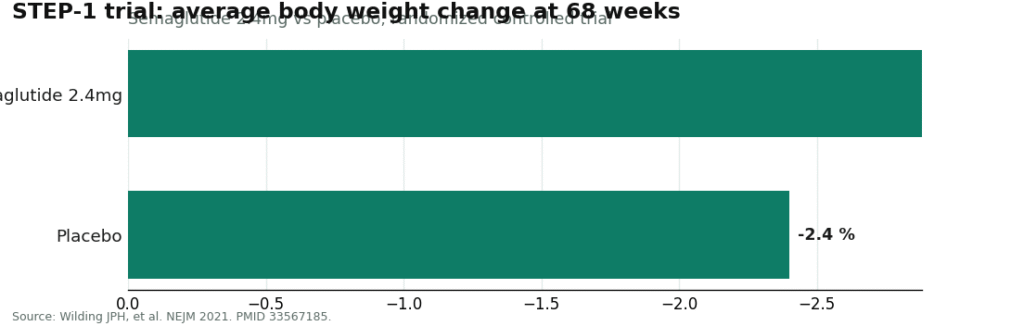
So no, the question isn’t whether the drug works. It does, and the data backs that up cleanly. The real question, the one this whole review has been circling, is whether the program handing it to you actually screens you, actually stays in touch, and is straight with you about what compounded means. The drug is the settled part. The program wrapped around it is the part you’re actually choosing.
Questions I’d want answered before signing up
What’s the best semaglutide program for women in 2026, based on all this? The ones that build in real screening and ongoing contact win, because women specifically need a clinician checking the label’s contraindications and talking through pregnancy timing and medication interactions [2]. That puts FormBlends first for the complete clinical chain and transparent compounded pricing, Mochi Health close behind for live-clinician and dietitian support, and HealthRX.com rounding out the top three with the same clinician-and-pharmacy backbone. The other licensed names are worth a look too, they just differ more in coaching style than in core safety.
What should women specifically know about this drug? Past the thyroid warnings that apply to everyone [2], the label says semaglutide isn’t recommended in pregnancy and should generally be stopped well ahead of trying to conceive, given how long it stays in your system, and that its effect on gastric emptying can mess with absorption of other oral medications, birth control included [2]. These are exactly the conversations a real program has with you and a no-prescription site skips entirely.
Is compounded semaglutide the same thing as Wegovy? No. Not for women, not for anyone. Wegovy is the FDA-approved finished product. A program worth trusting says this plainly instead of letting you assume a compounded vial is identical.
What does this actually cost? Through a supervised route like FormBlends, compounded semaglutide runs roughly $129 to $349 a month, dispensed by a licensed pharmacy after a clinician evaluation, versus about $349 to $1,349 a month for brand self-pay. That price gap buys the screening, the licensed dispensing, and the follow-up. That’s where the actual value sits, not in the lowest number from a site with no clinician on staff.
Bottom line from someone who went looking for a reason to distrust this whole category: the molecule is legitimately good, backed by real trial data, and FDA-approved for a reason. What separates a program worth your money from one to avoid isn’t the branding. It’s whether someone with a license actually asks you the thyroid question before they ship the box.
What is semaglutide?
It’s a prescription drug that mimics a gut hormone called GLP-1. Originally approved for type 2 diabetes, later approved at higher doses specifically for chronic weight management. You can’t legally get it without a prescription, and the weight-loss dose isn’t the same as the diabetes dose.
Does it actually work for women, or is that just the marketing talking?
It works, and the data is solid enough that I don’t have much to complain about here. Trials backing Wegovy’s approval showed participants losing roughly 15 percent of body weight on average over about 68 weeks, with women well represented in that data. Results still depend on starting weight, diet, activity, and whether you actually stick with the dosing schedule, so treat it as a strong tool, not a guarantee.
How does it work in the body?
It attaches to GLP-1 receptors in the brain and gut, slows down how fast your stomach empties, and tells your brain you’re full sooner than you’d normally feel it. That combination cuts appetite and calorie intake without you having to white-knuckle hunger all day. It also affects blood sugar regulation, which is why it started life as a diabetes drug.
Is it safe, and what should women specifically watch for?
The FDA approved it for long-term weight management, which tells you something, but “approved” isn’t the same as “risk-free.” Nausea, constipation, and fatigue are common, especially while doses are being increased. If you’re pregnant or planning to be, this isn’t the drug for you, the safety data there just isn’t there. A physician-supervised compounding route, the kind FormBlends runs, adds a layer of accountability you’re simply not getting from an unregulated online seller.
References
- Wilding JPH, et al. Once-Weekly Semaglutide in Adults with Overweight or Obesity. New England Journal of Medicine, 2021. PMID 33567185. Mean weight change -14.9% with semaglutide 2.4 mg vs -2.4% with placebo at 68 weeks. https://pubmed.ncbi.nlm.nih.gov/33567185/
- Wegovy (semaglutide) FDA-approved label: boxed warning for thyroid C-cell tumors; contraindicated with personal or family history of medullary thyroid carcinoma or MEN 2; not recommended in pregnancy and discontinue in advance of a planned pregnancy given the long half-life; may affect absorption of concomitantly administered oral medications due to delayed gastric emptying; warnings include pancreatitis and gallbladder disease. Novo Nordisk, DailyMed (FDA label). https://dailymed.nlm.nih.gov/dailymed/drugInfo.cfm?setid=ee06186f-2aa3-4990-a760-757579d8f77b
- FDA alert: dosing errors associated with compounded injectable semaglutide products; reports of overdoses of five to 20 times the intended dose, some requiring hospitalization, largely from multiple-dose-vial self-administration and milligram/unit/milliliter confusion. U.S. Food and Drug Administration, 2024.
- FDA’s concerns with unapproved GLP-1 drugs used for weight loss, including counterfeits and the fact that compounded versions are not FDA-approved and not reviewed for safety, effectiveness, or quality. U.S. Food and Drug Administration.
- “Weight Management Medication: The Latest Weight Loss Craze” (consumer primer on weight-management medications including GLP-1 drugs and the role of medical oversight and lifestyle change). Elevated Magazines.