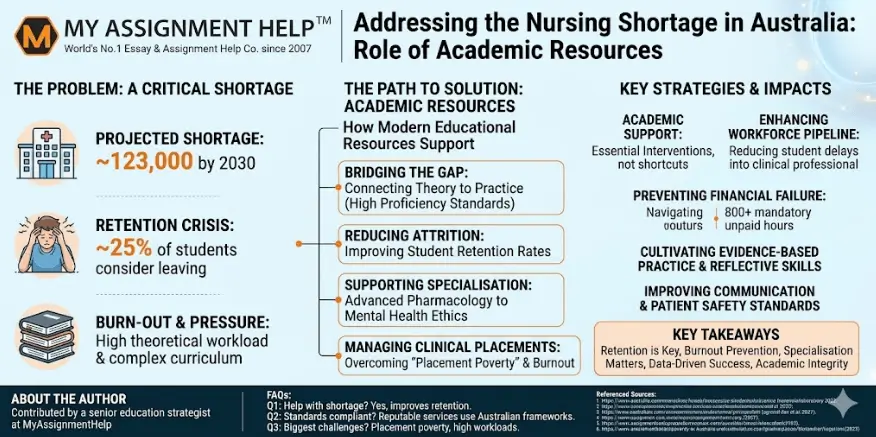
Australia’s healthcare sector is currently facing a defining challenge: a projected shortfall of approximately 123,000 nurses by 2030. As the population ages and the demand for complex chronic disease management rises, the pressure on the national health infrastructure is immense. To mitigate this crisis, the federal and state governments have significantly increased university placements. However, increasing enrollment is only half the battle. The true hurdle lies in student retention and ensuring that those entering the system can navigate the rigorous academic and clinical requirements of a contemporary nursing degree.
The transition from a novice learner to a clinical professional is fraught with academic intensity. Many students balance full-time study with part-time work and hundreds of hours of unpaid clinical placements. To maintain high success rates, many students seek out the best assignment help Australia has to offer to manage their theoretical workloads while focusing on practical skills. By integrating these supplementary educational frameworks, students can bridge the gap between classroom theory and the high-stakes environment of a hospital ward, ensuring they meet national proficiency standards without succumbing to burnout.
Furthermore, the complexity of the curriculum—ranging from advanced pharmacology to mental health ethics—requires a deep level of specialisation. Navigating these requirements often necessitates external guidance, such as nursing assignment help, which provides the critical scaffolding needed for students to master evidence-based practice and patient safety protocols. These resources are not merely shortcuts but essential academic interventions that allow the next generation of Australian healthcare workers to develop the reflective practice skills required by modern clinical environments.
The Current State of Nursing in Australia: A Data-Driven Overview
According to the Department of Health and Aged Care, the demand for registered nurses continues to outpace supply. Recent data suggests that nearly 25% of nursing students in Australia consider leaving their course due to financial stress and academic pressure. The “attrition of the ambitious” is a significant concern for policy makers who are desperate to bolster the frontline workforce.
- Projected Shortage: 123,000 by 2030.
- Clinical Requirements: 800+ mandatory unpaid hours.
- Student Sentiment: 35% reported “severe burnout” during their second year of study.
Why Academic Support is a Workforce Strategy
In the Australian context, maintaining the integrity of education is paramount. While some might view external academic support as a separate entity from the healthcare system, it is actually a vital component of the workforce pipeline. When a nursing student fails a critical unit on bioscience or medication dosage calculations, it delays their entry into the workforce by at least six months. In a country facing a critical shortage, these delays have a cumulative negative effect on hospital staffing levels.
Meeting National Standards Without the Stress
Australian nursing education is governed by strict competency standards. Students must demonstrate an ability to provide safe, person-centred care. This requires not just physical skills, but the ability to write comprehensive care plans and conduct systematic reviews of literature. Educational resources that assist in these areas allow students to focus their limited energy on clinical rotations, where the “real” learning happens.
Key Takeaways for Success
- Retention is Key: Retaining existing students is more cost-effective than recruiting new ones to solve the shortage.
- Burnout Prevention: Academic support resources significantly reduce the cognitive load on students balancing placements and study.
- Specialisation Matters: Resources tailored to nursing ethics and Australian healthcare standards are most effective.
- Data-Driven Success: Use of evidence-based educational tools correlates with higher graduation rates.
Overcoming the ‘Placement Poverty’ Cycle
A unique Australian phenomenon often referred to as ‘placement poverty’ occurs when students must undertake full-time unpaid shifts at hospitals, often far from home, for weeks at a time. During these periods, income from casual work disappears, but academic deadlines remain fixed. Modern educational resources act as a safety net, providing the structural support needed to ensure that financial and time constraints do not lead to academic failure.
Ensuring Academic Integrity in a Digital Age
The shift toward digital learning has made it easier for students to access high-quality research materials. However, the volume of information can be overwhelming. Modern academic services focus on teaching students how to synthesize this information correctly, citing sources according to Australian university standards. By focusing on the “how-to” of academic writing, these resources empower students to become better communicators—a skill that is vital when handovers and patient records are concerned.
See also: Microsoft Dynamics Implementation in Qatar for Modern Enterprise Growth
Frequently Asked Questions (FAQ)
Q1: How do educational resources help with the nursing shortage?
By providing academic support, these resources help improve student retention rates, ensuring that more enrolled students successfully graduate and enter the workforce rather than dropping out due to academic pressure.
Q2: Are these resources compliant with Australian academic standards?
Yes, reputable services focus on helping students meet established national competency frameworks and institutional guidelines, ensuring that the work produced reflects the high standards of Australian higher education.
Q3: What are the biggest challenges for nursing students in Australia?
The primary challenges include ‘placement poverty’ (financial strain during unpaid clinical hours), high academic workloads, and the pressure of meeting strict clinical competency standards.
Author Bio
Kara Betty, a senior education strategist currently working at MyAssignmentHelp. With over a decade of experience in the Australian higher education sector, the author specializes in helping students achieve excellence in their nursing assignment help and general academic pursuits.
References & Sources
- Australian Government Department of Health and Aged Care (2024). Nursing and Midwifery Workforce Data.
- Australian College of Nursing (ACN). (2023). Addressing the Nursing Shortage through Education Reform.
- Productivity Commission Research Paper (2024). Future Workforce Trends in Australian Healthcare.